



大切なのは噛む力を客観的に知ること
ここで、冒頭の70代の患者さんの話に戻りましょう。
入れ歯が痛くないことは大切です。でも「痛くない」は「ちゃんと噛めている」の保証にはなりません。総入れ歯を調べた研究(9)では、本人の噛めている感覚と、実際に測った噛む力に、はっきりした関係は見られませんでした。総入れ歯を新調した32人を調べた研究(10)では、3か月後に実際の噛む力は上がっていましたが、本人の感覚は、その改善を実際より大きく見積もっていました。つまり、感覚は意外と当てにできません。私の「今日はチョット体重が軽い気がする」と同じです。
一方、朗報もあります。日本の高齢者の調査(11)では、歯が少なくても入れ歯を使っている人の方が、使っていない人より、認知症になりにくい傾向がありました。ですから、残念ながら歯が抜けてしまった方も、しっかりと入れ歯を入れてください。「年寄りくさい」とか「恥ずかしいから」と思っているかもしれませんが、未来の健康のために、歯科医院でご相談してください。
そこで、お勧めしたいのが食べる能力を測ることです。歯科医院では、グミゼリーを20秒間噛んでもらい、砕けた度合いを調べることで食べる能力を数値化できます。年齢(50歳以上)などの条件が揃えば、保険適用の検査です。数値がわかれば、入れ歯の調整、噛む練習、歯周病の治療と、次の一手が見えてきます。
では、認知症予防のために今すぐできる3項目を振り返っていきましょう。難しいことは、1つもありません。
(1)歯磨きの際に出血していたら、歯科医院で歯周病検査を受けましょう。
(2)歯科医院で定期的にメンテナンスを受けましょう。
(歯科医院で専門的なメンテナンス「プロケア」を受けている人は、受けていない人と比較して、認知症リスクが1割程度低くなります 12)
(3)入れ歯をお使いなら、「痛くない」の先にある「噛めていますか?」を、歯科医院で相談しましょう。
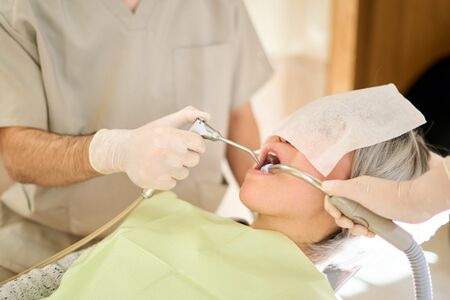
早速、検査を受けた患者さんは、食べる能力の測定結果を見て「まあ、落第点ね」と苦笑い。その後、入れ歯を調整して、今はたくましく、たくあんにリベンジ中です。「ポリポリ音がするのよ」と、嬉しそうに教えてくれました。たくあんとの対戦戦績は、最近は患者さんの勝ち越しだそうです。
歯の治療だけで、必ず認知症が防げると証明されたわけではありません。それでも、ポリポリと音を立てて食べる毎日は、きっと悪くない選択です。
(参考文献)
1.Takeuchi K, et al. Tooth loss and risk of dementia in the community: the Hisayama Study. J Am Geriatr Soc 2017.
2.Cerutti-Kopplin D, et al. Tooth loss increases the risk of diminished cognitive function: a systematic review and meta-analysis. JDR Clin Trans Res 2016;1(1):10-19.
3.Kusama T, et al. Poor oral health and dementia risk under time-varying confounding: a cohort study based on marginal structural models. J Am Geriatr Soc 2024;72(3):729-741.
4.Dintica CS, et al. The relation of poor mastication with cognition and dementia risk: a population-based longitudinal study. Aging (Albany NY) 2020;12(9):8536-8548.
5.Suzuki S, et al. Reasons for tooth extractions in Japan: the second nationwide survey. Int Dent J 2022;72(3):366-372.
6.Dominy SS, et al. Porphyromonas gingivalis in Alzheimer’s disease brains: evidence for disease causation and treatment with small-molecule inhibitors. Sci Adv 2019;5(1):eaau3333.
7.Ide M, et al. Periodontitis and cognitive decline in Alzheimer’s disease. PLoS One 2016, March 10.
8.Demmer RT, et al. Periodontal disease and incident dementia: the Atherosclerosis Risk in Communities Study (ARIC). Neurology 2020;95(12):e1660-e1671.
9.Wongchareee K, et al. Subjective and objective masticatory function and their associated factors in complete denture wearers. Mahidol Uni. 2024;44(1).
10.Adaptation to new complete dentures-is the neuromuscular system outcome-oriented or effort-oriented? Clin Oral Investig, doi:10.1007/s00784-017-2331-8
11.Yamamoto T, et al. 自己報告による歯科健康状態と認知症発症との関連: 愛知老年学的評価研究(AGES)プロジェクトの日本人高齢者を対象とした4年間の前向きコホート研究。Psychosomatic Medicine. 2012(74);241-248.
12.Association between dental diseases and oral hygiene care and the risk of dementia: a retrospective cohort study. J Am Med Dir Assoc 2023, PMID 37709259.
